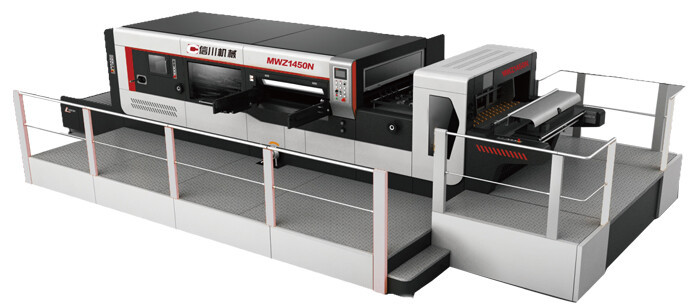
The feeding method of a die-cutting machine is KEY to its efficiency, precision, and final product quality! Choosing the right one depends on your material’s thickness, stiffness, flatness, as well as your production volume and automation needs.
With the fast development of automation and intelligent technology, 3 feeding methods have become industry standards: Cassette Feeding, Feida Feeding, and Front Edge Feeding. They’re designed to meet high-speed, high-precision demands, work with various materials, and help your business stand out with better efficiency and competitiveness!
1. Cassette Feeding: High-End & Scratch-Free
Cassette Feeding is the top-tier choice for die-cutting machines. century’s cassette feeding technology is backed by European patents, with two core advantages: ultra-high precision and scratch resistance.
Equipped with vector zero-point control and servo synchronous drive, it delivers an impressive feeding accuracy of ±0.05mm—ensuring perfect alignment for printing, die-cutting, and waste cleaning every time.
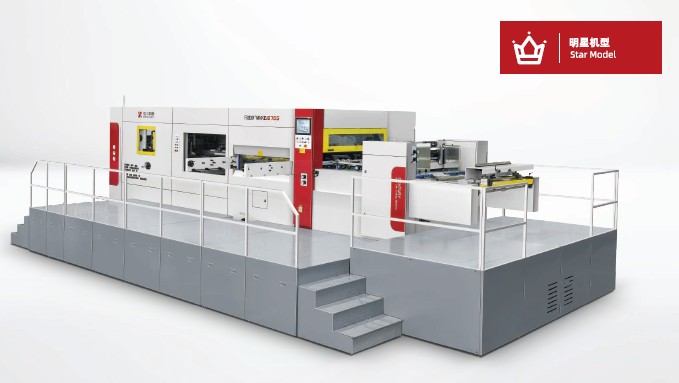
Its friction-free design (negative pressure adsorption + integral cassette pushing) completely avoids scratches on material surfaces, making it ideal for high-value, high-end materials.
Compatible with models like MWZ 1670G and MWZ 1450G, it stably conveys warped paper and significantly reduces paper jams. Plus, it’s easy to maintain (no wearing parts in core components) and runs stably at high speed for long periods—perfect for high-end gift boxes and premium packaging production!
2. Feida Feeding: Stable for Thick/Special Paper
Vacuum Feeder (Feida Feeding) is all about stable single-sheet conveying. It uses vacuum adsorption for precise paper feeding, working exceptionally well with hard materials like thick paper and special paper—no more annoying paper jams!
Note: Its structure is relatively complex, with medium running speed, so it’s not suitable for large-scale high-speed production or thin paper. It also requires regular inspection and maintenance of wearing parts (slightly higher maintenance cost), making it better for special packaging and thick paper products.
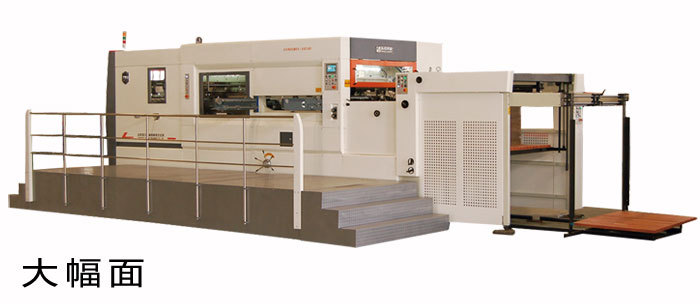
3. Front Edge Feeding: High-Speed & Cost-Effective
Front Edge Feeding is your go-to for high speed, efficiency, and cost-effectiveness. It runs fast, meeting large-batch production needs, and is mainly used for conventional packaging materials like ordinary cardboard and corrugated cardboard (with moderate feeding accuracy).
A heads-up: Contact friction during feeding means it’s not great for warped paper (prone to jams), and maintenance difficulty is medium. It’s widely used for standard color boxes and ordinary packaging where surface quality requirements are not high.
To reduce scratches on paper surfaces, century adds variable frequency air volume adjustment to its front edge feeding system—perfectly adapting to most corrugated cardboard feeding needs!